
About Author
Kristian Wright
Kristian Wright is CEO and co-founder of enhanced.io, a channel-only SOC-as-a-Service provider built for MSPs. He has over 30 years in IT leadership and has co-founded three service delivery businesses.
enhanced.io, the channel-only Open XDR SOCaaS for MSPs
The deal you lost
You were in a final proposal. Your pricing was competitive. Your team had been managing this client's infrastructure for three years. Then a competitor came in with a managed security service that included a SOC, compliance reporting, and full spectrum coverage. You were not even in the same conversation.
If this has happened once in the last 12 months, it will happen again. The MSPs who are winning security-conscious clients today are not necessarily the ones with the best networking capability. They are the ones who can answer the security question with something specific.
This post is about what that something looks like, how you package it, and what the commercial model means for your practice.
What full spectrum security covers (that SASE does not)
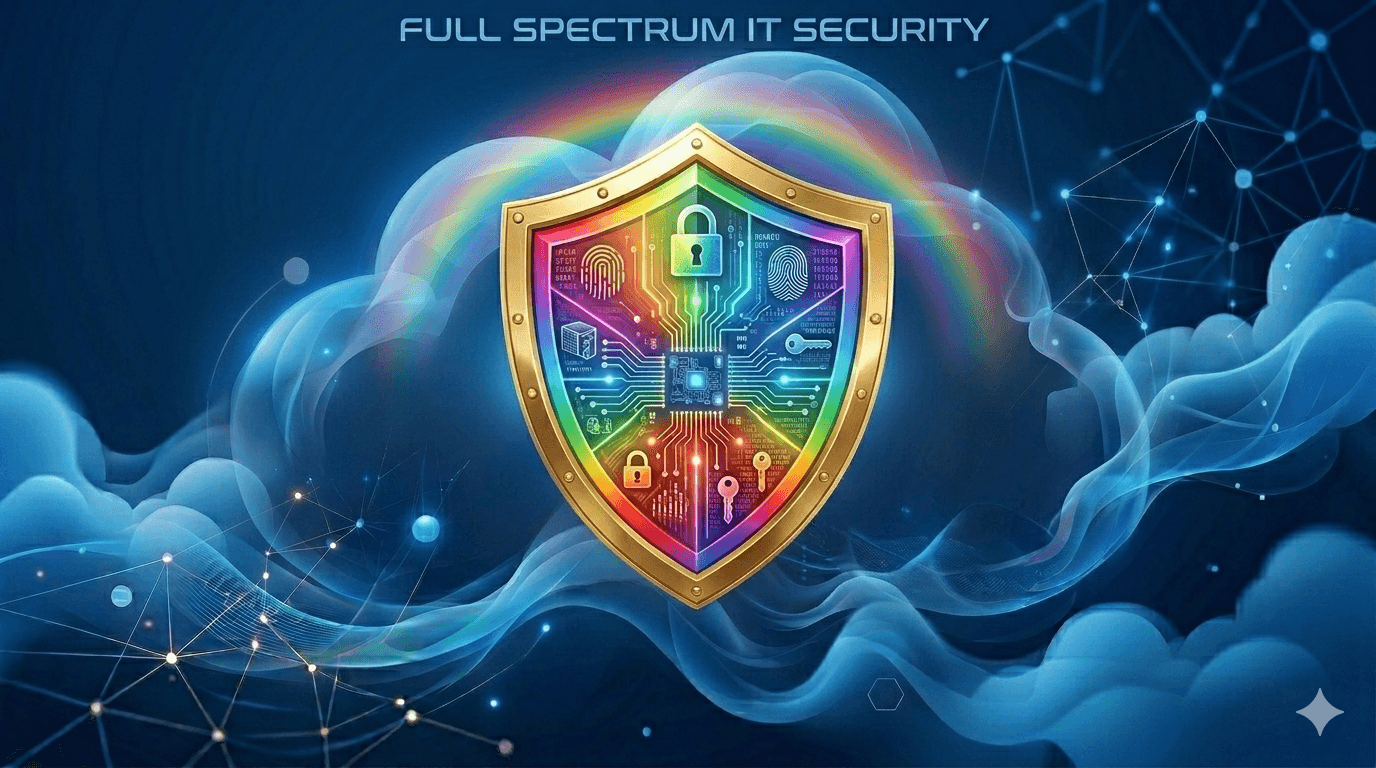
SASE handles access and edge policy. It is one component of full spectrum security. The other five surfaces are:
Endpoints: EDR integration with all major vendors. Workstations, servers and laptops.
Network: True network detection and response. Lateral movement that endpoint tools miss.
Cloud: Azure, AWS, GCP infrastructure monitoring. Beyond Microsoft 365 licensing.
Identity: Full identity threat detection and response. Entra, Okta, Active Directory, both cloud and on-prem.
SaaS: Application logs beyond email. SharePoint, Teams, Salesforce, and more.
IoT/OT: Device discovery and monitoring for unmanaged and operational assets.
The thing that makes full spectrum coverage genuinely different is not that each surface is monitored. It is that signals across all six are correlated simultaneously. A suspicious identity event connected to an unusual cloud access connected to a new endpoint process is a clear attack pattern. Isolated, each is just noise.
Key takeaways |
|---|
|
What SASE offers that full spectrum security needs
SASE is not a competitor to full spectrum security. It is a component.
ZTNA provides a better access model than legacy VPN. SD-WAN gives you intelligent traffic management for distributed client environments. SWG filters web threats. CASB gives you some cloud application visibility.
When SASE is deployed as part of a full spectrum strategy, its logs and access data become one of the six surfaces feeding into your correlation engine. SASE access events, correlated with identity behavior, endpoint telemetry, and cloud activity, give you a richer picture than any of them alone.
The MSP opportunity is not to choose between SASE and full spectrum security. It is to deploy SASE where it adds value and wraps full spectrum detection and response around it.
Key takeaways |
|---|
|
The service model - What you deliver to clients
Here is what a full spectrum managed security service looks like when it is packaged correctly:
Named accountability.
A named, CISSP-certified Fractional Security Director. Not a generic help desk. A dedicated security leader embedded into your MSP, supporting client engagements, orchestrating response and delivery, attending MSP-led QBRs, owning compliance reporting, and enabling confident board-level discussions around risk, liability, and coverage. The answer to every MSP asked: “Who owns security here?”
24/7 expert-led SOC.
AI handles the volume. Humans make the decisions. Real analysts who understand context, review what the correlation engine surfaces, and escalate only when escalation is warranted. Not another alert generator. A security operations team.
Full spectrum coverage across all six surfaces.
Endpoint, network, cloud, identity, SaaS, and IoT/OT. All signals are correlated. One platform. 400+ integrations with your existing RMM, PSA, endpoint, and cloud tools. No rip and replace.
Board-ready compliance reporting as standard.
Reports mapped to HIPAA, NIST-CSF, NIS2, PCI-DSS, and ISO 27001. Included. Not add-on. The kind of documentation your clients' insurers and procurement teams are starting to require.
One subscription. You keep the client relationship. enhanced.io operates channel-only. We never sell directly.
Key takeaways |
|---|
|
The commercial model - Margin, pricing and how to bill it
This is the section the Margin Watcher cares about. Here is what the numbers actually look like.
Margin.
Most enhanced.io partners see 40 to 60% margin on their security practice. The service is priced for channel economics. You mark up, you bill the client, you keep the relationship.
Pricing model.
Simple subscription. Per endpoint, per month. Flexible scaling. No hidden fees. No surprise charges when a client adds a new site or onboards 50 new employees.
How to bill it to clients.
The most effective framing we see from partners is to position full spectrum managed security as a separate line item from managed services. Not bundled. Not hidden in infrastructure costs. A named service with a clear value proposition.
'We provide managed endpoint, network, cloud, identity, SaaS, and IoT/OT monitoring, with 24/7 SOC coverage and a dedicated security director, for X per user per month.'
Clients in regulated verticals, particularly healthcare, finance, legal, and professional services, understand this conversation. They have been through insurance renewals that asked for it. They have procurement teams that require it. They will pay for it if you frame it correctly.
What the deal looks like over time.
Security clients tend to be stickier than pure infrastructure clients. Once full spectrum monitoring is in place and compliance reporting is part of the QBR rhythm, the conversation shifts from 'do we still need this?' to 'what are we covered for next year?'
Key takeaways |
|---|
|
Client reporting - What good looks like
The compliance reporting question comes up in almost every serious security conversation. Clients want to know what they are covered for. Their insurers want evidence. Procurement teams want documentation.
Board-ready compliance reports, mapped to the frameworks your clients are required to evidence, are not a nice-to-have. They are increasingly the price of entry for clients in regulated sectors.
enhanced.io compliance reports are included as standard. They map coverage to HIPAA, NIST-CSF, NIS2, PCI-DSS, and ISO 27001. They are designed to be presented at board level without requiring the MSP to translate technical detail into business language. Your fractional security director owns the delivery.
The reporting layer is also what protects you. If something goes wrong and a client's insurer asks what security measures were in place, having a year of board-ready compliance reports is a vastly different position to having a firewall log.
Key takeaways |
|---|
|
How to start the conversation with clients
You do not need to lead with technology. You lead with the question the client is already asking.
'Your insurer asked about multi-factor authentication and endpoint coverage in your last renewal. They will probably ask about cloud and identity coverage next time. Here is what we have in place to make sure you can answer that question.'
Or: 'We have three clients in your sector who have asked us to help them prepare for NIS2 compliance. The conversation always starts with understanding which surfaces are currently monitored. Can we walk through that together?'
The Enterprise Readiness Assessment gives you a structured starting point. It maps the client's current tools against the six attack surfaces and shows exactly where the gaps are. Five minutes. Free. Gives you a specific conversation rather than a generic one.
FAQ
How is this different from just reselling a SIEM or MDR tool?
A SIEM ingests logs and generates alerts. MDR typically covers endpoints. Neither gives you full spectrum coverage across all six surfaces, correlation between them, expert-led 24/7 response, compliance reporting, and a named fractional security director. The service model is what differentiates this from tool resale.
Will enhanced.io compete with us for our clients?
No. enhanced.io is channel-only. We do not sell direct to end clients. We do not have a direct sales team targeting your client base. The MSP owns the client relationship. That is a structural commitment, not a sales promise.
What is the onboarding process?
Integration uses your existing tools. enhanced.io connects to your RMM, PSA, endpoint platform, and cloud environments through 400+ supported integrations. Onboarding typically takes days, not months. Your fractional security director is named and introduced to the client at the start of the engagement.
How do we handle the conversation with clients who already have an existing security tool?
The positioning is complementary, not replacement. 'We are adding full spectrum correlation and 24/7 human monitoring across the surfaces your existing tools cover, and the surfaces they do not.' Open XDR means their existing tools become inputs into the correlation engine, not things that need replacing.
What sectors are most ready for this conversation?
This conversation is already well underway in regulated and regulation-adjacent sectors - not because organizations want more security overhead, but because they are being forced to demonstrate it. Healthcare organizations navigating HIPAA requirements. Financial services firms dealing with PCI-DSS, FCA expectations, and increasing scrutiny from auditors and insurers. Legal and professional services firms under pressure to evidence controls aligned to GDPR, NIS2, ISO 27001 or SOC 2. Then there are the clients who may not see themselves as “regulated”, but have recently been through a cyber insurance renewal, a customer security questionnaire, or a failed audit. For them, the shift from “do you have security?” to “prove it” has already happened. Regulation is also expanding outward through the supply chain. Frameworks like NIS2 in the EU and US requirements such as DFARS and CMMC, do not just apply to prime contractors or critical infrastructure operators. They increasingly apply to any organization that supplies them. If your client touches regulated industries (even indirectly) they inherit compliance obligations whether they expect to or not. At the same time, baseline security frameworks like NIST CSF are becoming the reference point for what “reasonable security” looks like across industries, regardless of size. Mid-market organizations are now being asked to map controls, demonstrate maturity, and show accountability, often without having senior security leadership in place. If your clients operate in, or supply into, environments governed by HIPAA, PCI-DSS, GDPR, ISO 27001, SOC 2, NIS2, DFARS, CMMC or NIST CSF, the conversation is not coming. It’s already happening - and it is usually happening without the MSP in the room. That is the gap a Fractional Security Director is designed to close.